
Raghbir Singh Brar
Faridkot
Like the considerable drop in the yield of paddy in outgone seasons,there could also be a considerable drop in the yield of wheat,thanks to the higher temperatures.
The winter was short lived, dry and the spring season was cut short due to an unexpected rise in the temperature, between 2 to 4 degree centigrade.
The temperature in February 2026 remained between 27 to 30 degrees on average,against the previous year’s between 24 to 27 for the corresponding period.
The higher temperature may lead to the considerable drop in the yield of the wheat, shattering the dreams of the farmers,who had high hopes to recover from the setback by the low yield of paddy.
The higher temperature, while the crop is in a transitional phase, from flowering to grain filling, is very harmful.
“It leads to the short period of grain filling and shrinking of the grains.This February ,the temperature was noted from 2 to 4 degree celsius higher than normal and it may lead to a decline in the yield of the crop.It forces the crop to mature shortly and the grains do not fill properly.we have noted that the wheat crop has transformed colour from green to brown,showing the impact of the heat,’ said Kulwant Singh, chief agriculture officer Faridkot when contacted.
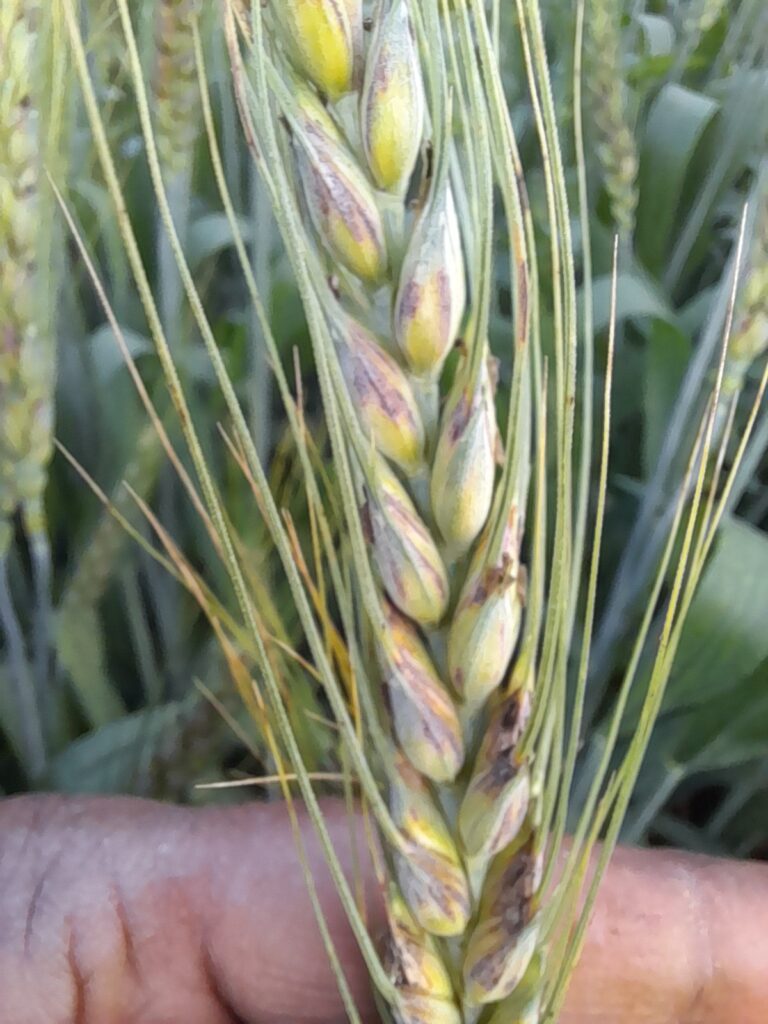
In the fields of wheat,one can note that the colour of the glumes(bracket cover around the grain) has changed to purple black and mostly,upper parts of the Awns have dried up.It is giving the crops a look that they are maturing sooner than maturity time.
Even the night temperature has much more effect on the crop in February, if it rises above 17, there are chances of fast respiration of plants which has a damning effect on the crop.