
Raghbir Singh Brar
Faridkot | October 27, 2026
Email: raghbirsinghbrar@gmail.com
The soaring market value of paddy husk has turned a routine agricultural byproduct into a lucrative flashpoint in Punjab. While the state government led by Chief Minister Bhagwant Singh Mann had officially declared that leftover cleaning material (jhar) belongs to labourers—vowing to abolish traditional commercial contracts—allegations have surfaced that a tightly controlled monopoly is operating on the ground.
In Kotkapura, local stakeholders allege that police intervention and indirect monopolization are funneling lakhs of rupees into the pockets of ruling party-affiliated influentials, squeezing out independent operators.
Police Crackdown Outside the Grain Market
The friction came to a head on October 22. According to local accounts, a police team led by ASI Surinderjit Singh swooped down on approximately four Haramba thresher operators who had stationed their machinery on vacant plots to clean farmers‘ leftover produce.
The operators were ordered to halt operations immediately, and four individuals were briefly detained before being released later that day.
“We have been cleaning the left-over produce after it is sifted at commission agents’ shops,” said one thresher operator, requesting anonymity for fear of backlash. “As enough grain mixed with husk and stubble is left out of sale, farmers come to us. We have done this for about four years. But this season, the police stopped us, claiming we cause pollution.”
Another operator pointed to the steep rise in market prices as the core motive behind the clampdown.
“Paddy husk prices have almost doubled, jumping from around ₹150 per quintal to above ₹250 per quintal, creating a business worth over ₹50 lakh,” he claimed. “When we clean it outside the market, we hire four to five people and charge a small fee from farmers and we sell the Jhar which we make livelihood. Now, someone came and told us not to resume operations, claiming he holds the husk contract—despite the government’s stance against such contracts.”
The man he named who allegedly poses as a contractor is a chemist from near the Kotkapura bus stand.
Inside the Kotkapura Grain Market
Within the designated premises of the grain market, Haramba threshers continue to operate, charging upwards of ₹300 per hour from farmers and migrant workers who purchase the jhar to resell to local traders.
However, the official narrative—stating that the material exclusively benefits the labor force—conceals a different reality. Hundreds of tractor-trollies laden with jhar are reportedly managed and sold by influential figures linked to the ruling party, transforming the byproduct into a high-stakes commercial enterprise.
When this reporter was getting his paddy cleaned at an external site on October 22, the intervening police team reportedly snatched his mobile phone after objecting to photographs being taken, maintaining that they acted on the directions of the local Deputy Superintendent of Police (DSP).
“We get complaints from the people that they cause public nuisance, and so we have to take action against them,” the police party stated at the scene.
Official Stance
Gurmeet Singh Arewala, Chairman of the Market Committee in Kotkapura, maintained that the leftover paddy material legally belongs to the laborers and confirmed that no formal commercial contracts are issued for it.
“These people had met me, and I had asked them to work, but the jhar belongs to the labor,” Arewala said.
When contacted, SHO City Kotkapura Sukhwinder Singh stated that no First Information Report (FIR) had been registered against anyone for cleaning produce outside the grain market, noting that the department had received no written complaints on the matter.
Local observers, however, argue that the systemic enforcement vacuum has birthed a shadow economy.
“The Chief Minister’s policy had good intentions, but it disrupted established business chains,” said a Kotkapura resident. “It is alleged that intermediaries have struck understandings with local ruling party politicians to illegally run and monetize this business.”
So, when there are high political stakes, the misuse of police is bound to be there.
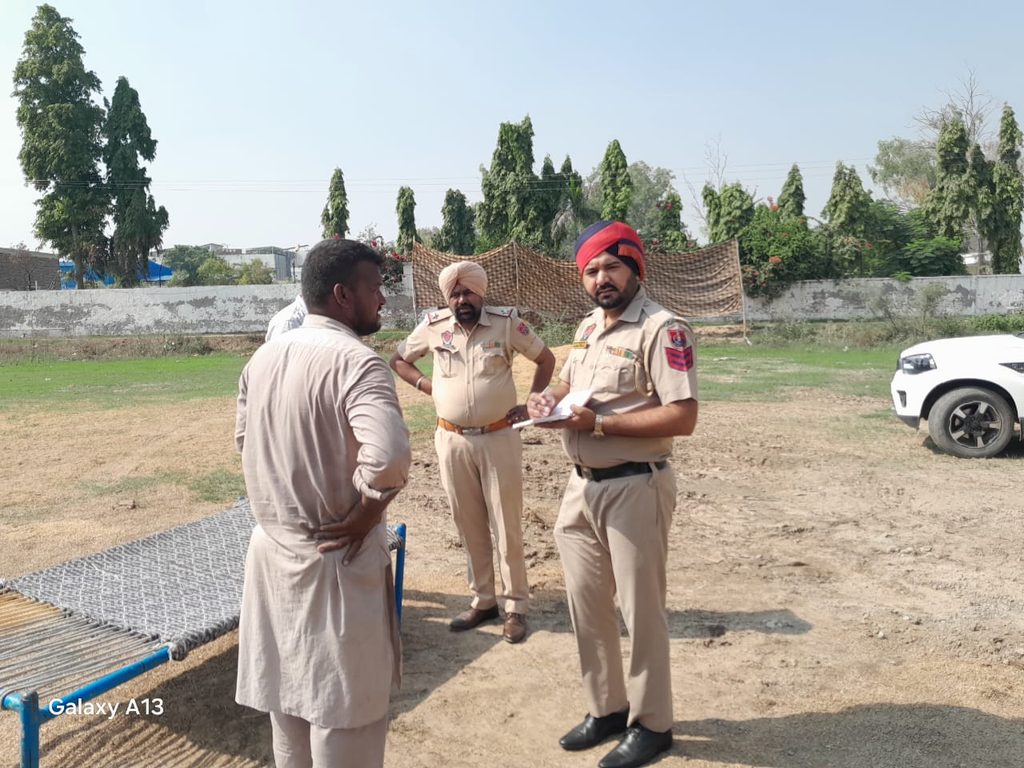
POLICE TEAM LED BY ASI SURINDERJIT SINGH ON OCTOBER 22,2026 AT A SITE TO HALT OPERATIONS OF CLEANING JHAR