
“We don’t not go to the police as we don’t want them to linger in jails'”Rachpal Singh Sosan.
Raghbir Singh Brar
Faridkot
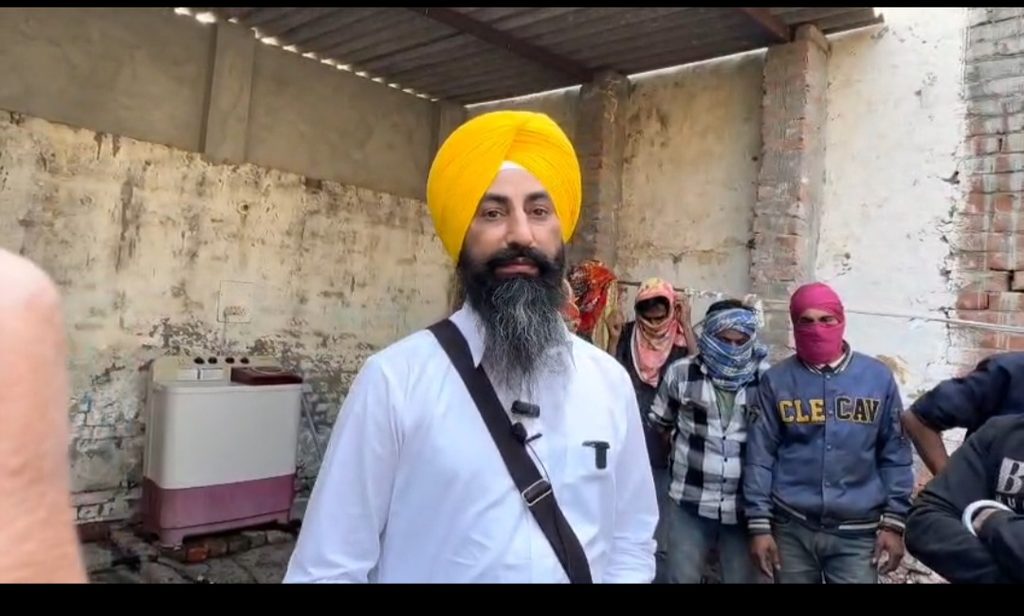
Allegedly puncturing the tall claims of the Punjab government regarding its ongoing anti-drug campaign *Yudh Nasian Virudh*, Bhai Rachpal Singh Sosan, a candidate and state media coordinator for the “Waris Punjab De” party, has thrown a direct challenge to the administration.
In a widely circulated video message, Sosan claimed that he and his supporters successfully apprehended two active drug smugglers near Jalaleana Road, recovering approximately 40 small pouches of narcotics from their possession.
Police Only Register FIRs, But the Chain Continues
Detailing the citizen-led operation, Sosan explained that since the suspects hailed from Prem Nagar, they took one of them back to his residence. In a bold move, they switched on the suspect’s mobile phone speakerphone to see how freely local networks operated.
“Some addicts contacted him right then. We managed to intercept about 5 to 6 local addicts who called wanting to buy chitta,” Sosan stated.
Justifying why they bypassed handing the accused directly over to the police, Sosan expressed deep frustration with the formal legal cycle: “We do not hand them over to the police because law enforcement only registers FIRs, and they end up right back in jail.”
“They quickly come out on bail and immediately dive back into criminal activities.”True political will to completely halt the supply of chitta is completely missing,”sosan alleged. Humanitarian Intervention and Health Concerns
In a striking twist to standard vigilante actions, Sosan highlighted a grim medical reality discovered during the confrontation. One of the captured smugglers-cum-addicts was found to be HIV positive.
Instead of routing him through the conventional prison system—where medical infrastructure for managing infectious diseases among inmates remains severely strained—the group chose an alternative path. Rather than sending him to a health hazard environment in jail, they urged him to realize his mistakes, handed him de-addiction medications, and instructed him to stay indoors under the protective care of his family.
Defending the addicts as systemic victims, Sosan added: “They are victims, daily wagers, and people who have suffered endlessly at the hands of a broken system. We want local communities to stand up against this evil, and we received a tremendous, positive response from the people on Jalaleana Road.”
Administrative Silence
In an effort to balance the report, this reporter forwarded the video footage and details captured by Bhai Rachpal Singh Sosan via WhatsApp to Jagdheer Singh, the social media handler for the district police, seeking an official comment from senior officers. However, no response was received at the time of publication. A similar inquiry message sent to the official contact number of the Station House Officer (SHO) City Kotkapura also elicited no reply.
Punjab Express does not independently verify any of the specific allegations made by Bhai Rachpal Singh Sosan.
—
Fact Check & Ground Realities: The Drug Menace in Kotkapura
To understand the weight of these local allegations, independent tracking of crime records reveals that Kotkapura and the wider Faridkot district remain absolute hotspots for synthetic drug movements:
Escalating Contraband Seizures:
Law enforcement agencies have repeatedly intercepted major trafficking routes across the region. For instance, recent crackdowns led to multi-kilogram heroin seizures along key transit paths like the Kotkapura-Muktsar road near Khara village, alongside massive recoveries of pharmaceutical opioids and capsules.
Contraband Inside Custody:
The depth of the crisis is further underscored by institutional vulnerabilities. Recent recoveries—such as the seizure of 72 grams of chitta hidden inside barracks at the Faridkot Central Jail—highlight how deep-seated the supply chains stretch, even behind bars.
Community Pushback:
Grassroots anger has steadily boiled over across the region. Local political and religious factions, including Waris Punjab De, have launched aggressive localized campaigns—such as publishing contentious directories of youth fatalities attributed to overdoses—reflecting an intense public disconnect with official state rehabilitation claims.